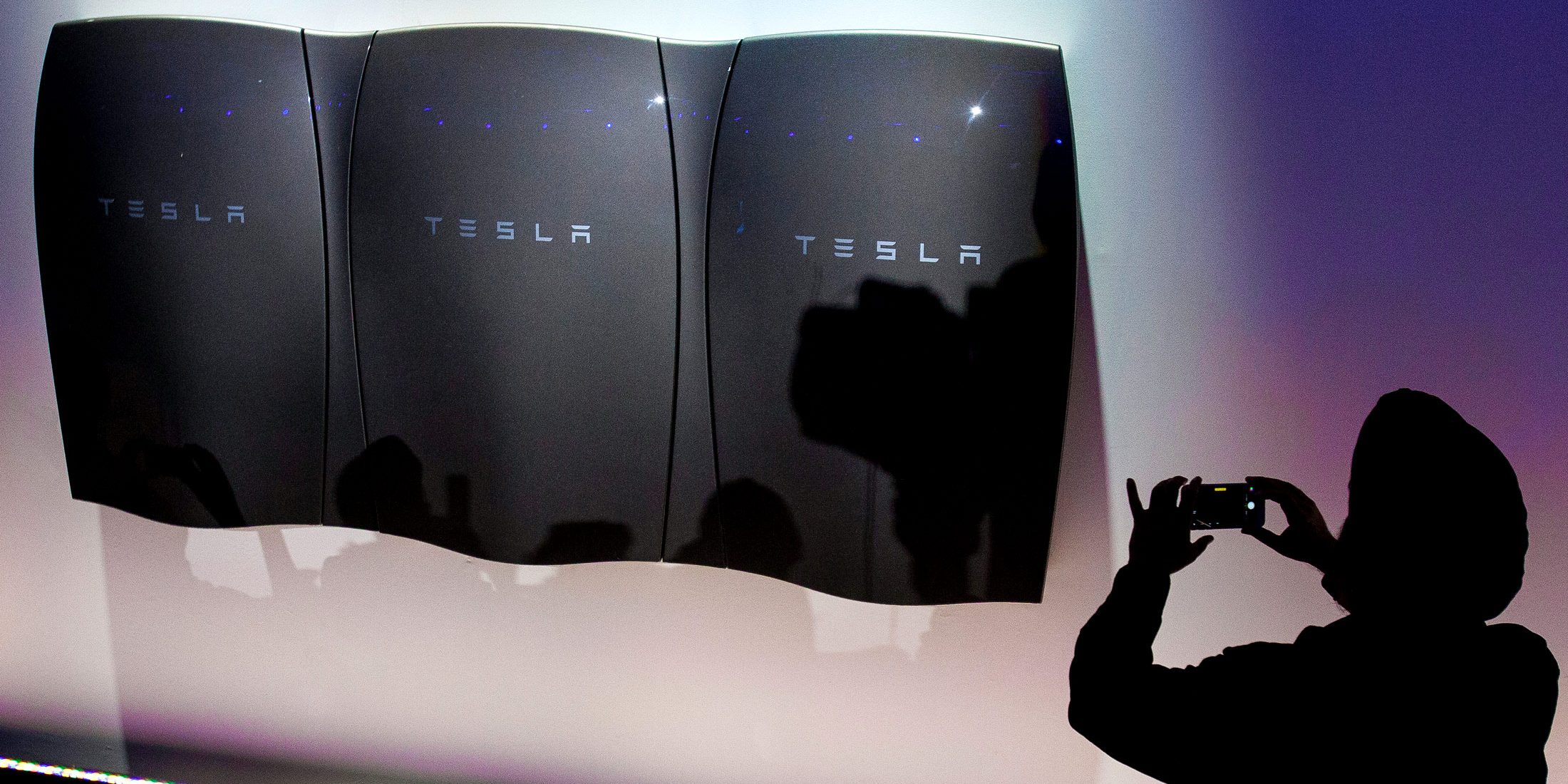
Yep, If it sounds too good to be true it usually is. Is Tesla’s Powerwall? The battery industry is notorious for having the next big thing in storage right around the corner yet the products never make it to market do too they are cost prohibitive, too large or just do not work in real life applications. Tesla’s Powerwall on the other hand is light, compact and rather inexpensive. Does Elon Musk have the secret sauce? Time will tell and it will be interesting to see how Tesla’s Powerwall performs, although I see it has problems of its own already.
First, there is no way, and I mean no way it will ever last 20 years if your cycling it or even in a standby situation for that matter. I highly doubt it will even make it 10 years. If the warranty is a no questions asked free replacement warranty which I highly doubt, then it would be worth buying just on the warranty alone. I believe the warranty to be all hype right now. It’s a safe bet to assume the warranty will be just like every other battery manufactures warranty, pro-rated, basically worthless, and good luck trying to collect (you didn’t read the fine print dummy!). Secondly the 7Kw battery pack is actually a 24kw battery pack limited to only 7kw of useable energy. This doesn’t sound like a good business plan unless they can truly get the price of lithium under a $100 a kwh without subsidies (I know think gigafactory and 500,000 Teslas’ on the road). Even then the profit margins are coming in a little thin, unless they plan on selling the Powerwall factory direct. Third the max discharge rate on the 7kw Powerwall is 2kw. 2kw is not a lot, so right away you pretty much need another battery pack in parallel to handle draws or voltage spikes over 2kw. It’s kinda useless by itself, except for power outages lasting only a couple of hours. The biggest problem with lithium-ion batteries and the Powerwall is they need complex Battery Management System (BMS) to be in place to limit the charge and discharge, if that fails you can be in serious trouble. It will be interesting to see how the Powerwall performs especially once a few of them are strung together in parallel. Will it have the same problems as other battery chemistrys have once you start adding them together in parallel? Time will tell.
For the Solar City and Vivint customers how much is it going to cost to upgrade to the Solaredge inverter that the Powerwall was designed to be paired with, and how many of them will I need? What is my warranty? When and where can I actually buy my Powerwall, how much will it really cost? Do I need a special inverter i.e. Solaredge or any other special equipment to operate my Powerwall? Is it compatible with all of my other existing hardware? What happens if the BMS or inverter fails, will my house be in danger of burning down? If my Powerwall fails how long will my warranty claim take? Does it really work as advertised? As you can see there are still a lot of questions to be answered. Time will tell.
These are a few of the many questions any consumer should be asking themselves before jumping on the Elon Musk magical mystery tour and even think about buying a Powerwall. I believe right now it is all hype, and Elon and the gang at Tesla are hoping to figure it all out as they go along. Hopefully they do. What about the 40,000 orders for the Powerwall they have already you might ask? Tesla hasn’t taken a dime from anyone for delivery of a Powerwall. They allegedly had 40,00 inquires on when, where, and how people could by a Powerwall. Those people got no answer other than summer of 2016. Will the release of the Powerwall be delayed like the Model X? Time will tell.
For the sake of the renewable engery I hope Elon can deliver, but until he does, and I actually have a Powerwall of my own that I can cycle and test myself, I don’t believe the hype. Call me a skeptic.
Stay Charged my Friends,
AW