


The Gel Battery, The Best choice in a Cycling Application for Renewable Energy
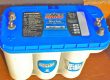
We get asked this question all the time, which batteries are the best in a cycling renewable energy application, It’s the Gel battery and I will tell you why. First, I’ll take the floods right out of the equation, although they are the cheapest solution. When you put floods in series or add a parallel string, and them cycle them you’re asking for nothing but problems. Not to mention a potentially dangerous situation. Secondly the required maintenance is expensive and time consuming. Finally, when you factor in the amount of out gassing of hydrogen during the charge cycles your potentially sitting on a hydrogen bomb. Who wants that anywhere near their home or business? So that really leaves two choices AGM or Gel.
Here’s the Facts
Cycle life
If you’re using your batteries in a deep cycling application such in a PV solar energy system or as your house batteries on a boat, Gel batteries are the only way to go. No other battery type delivers the energy cycle life you need for as long as a Gel can. When properly maintained a Gel battery is also going to give you 2 to 3 times the cycle life versus an AGM depending on the battery size. The average cycle life of mono-
Stratification
AGM batteries experience acid stratification. As the acid is liquid, the high specific gravity acid coming out of the plate during recharge will tend to flow to the bottom of the cell creating stratification. Thus reducing the capacity of the battery. As the cycling process continues the stratification effect will happen exponentially creating an even smaller reserve capacity. Using an equalization charge to de-
Cell Sulfation
A very important point is to consider is cell sulfation. Cycling batteries, particularly PV batteries tend to spend a fair amount of time operating in a partial state of charge. This means lead sulfate will exist on the battery plates for long periods of time. Lead sulfate has a nasty tendency to harden with time, and results in a permanent loss of capacity. Over time the sulfate can also grow through the separator, and contact other plates causing a sulfation short. Gel batteries due to the presence of the gel and a separator resist this type of failure exceptionally well. While being very problematic for an AGM or flooded battery.
Recovery from discharge
The Gel battery is also good at recovery from deep discharge. AGM and most flooded batteries can be over discharged to the point where it is almost impossible to recharge them. This is because the electrolyte can be driven to almost pure water by the discharge and this leaves no ions in the solution to conduct current. So when the battery is placed on the charger, no charge current can flow through the battery to recharge the plates. The Gel battery due to tight structure of the gel always has some ions to conduct charge current resulting in excellent recovery from deep discharge.
Battery abuse
Another important advantage of the Gel battery is that it is more tolerant to overcharge abuse than an AGM. Almost any loss of water in an AGM battery results in loss of performance due to the so-
Calcium alloy grids
Another feature of the Gel battery is that it has calcium alloy grids. Calcium alloy batteries require less overcharge to become fully charged than antimony alloy batteries. For PV applications where there is limited time and energy available for recharge, this can be a huge advantage. A typical antimony alloy battery will require at least 10% and sometimes more overcharge to get fully charged. A Gel battery will require only about 4-
The Right Battery for the Right Application
As you can see the AGM just can not compete with the Gel battery in a cycling application. You must always consider using the right battery for the right application. The AGM’s application is a starting battery offering high CCA’s, but has no place in a cycling application such as in a PV array or as a house bank of batteries on yacht. However in subtropical and tropical environments a Gel battery will also deliver high CCA’s and can be used in the same starting application as an AGM without worry while receiving all the benefits of the Gel over an AGM.
Stay Charged,
AW






Solar power can be used to produce electricity, to heat water
and air around you. Solar power systems are linked to electric powered tools which use DC current and manage electric current in storage type lead acid power packs that power the household electric powered equipments since the sunlight is not continuously accessible
to provide light for the photovoltaic panels. In addition, electricity must
either be consumed immediately or stored in batteries or sold on the network.
agree! – you can consume right then – If your power company will purchase your power, great – The rub is energy storage. Most solar systems i have seen do not work as advertised ( when cycling) – Batteries or cells in a solar energy storage bank must be in family. Meaning impedance of said cells or batteries must be close also the Open Circuit Voltage (OCV) should be close . Please read the Zeiss Advantage – This insure’s that the bank will be in family and work as advertised
I’ve never had a problem with my AGM batteries. I use them in my house bank in my boat. I use my boat at least twice a month and use it for about a month straight twice a year when I go to the Bahamas. Again no problems and there are 3 years old and running strong. I’m thinking of installing solar at my house with a battery bank. Why would I spend more money on gel batteries when AGM batteries work just fine?
I’ve found Gel batteries to be way too expensive for my customers. That is why I go with AGM batteries they are more cost effective.