


All lead acid batteries, particularly flooded battery banks, will produce hydrogen and oxygen gas under both normal and abnormal operating conditions. Gel and AGM still outgass but most is recovered in the recombining process, and are nowhere near as problematic as it is in flooded battery banks. This outgassing, is primarily the result of lead acid batteries under charge, where typically the charge current is greater than that required to maintain a 100% state of charge due to the normal chemical inefficiencies of the electrolyte and the internal resistance of the cells. This excess charge electrolyzes the water in the electrolyte mix of sulfuric acid and water, causing free hydrogen and oxygen to be vented from the battery. Flooded battery banks will outgas at varying rates under almost all conditions. Even in storage where minor amounts of gas will be produced due to the normal evaporation of water, and the tendency to self-discharge. In normal operation flooded battery banks are kept in a state of maximum voltage potential in order to maintain maximum power reserve. This constant state of charge current causes the flooded battery to outgas hydrogen and oxygen continuously. Room temperatures higher than the recommended ambient (typically 20°C-25°C) will accelerate the outgassing of hydrogen and oxygen.
Flooded battery banks are often delivered filled with electrolyte. Once the battery is filled with electrolyte, the corrosion and self-discharge processes begin. Flooded battery banks self discharge rate is 10-15% of the nominal capacity per month in a subtropical/tropical climate such as Florida or the USVI. During long-term storage, flooded battery banks require periodic refresher charges for the equalizing of these corrosion and self-discharging side effects, the equalization charges can be dangerous and should not be performed by the end user. The initial electrolyte filling date represents the beginning of service life of the battery. he most noticeable consequence of hydrogen outgassing is the direct impact it has on the watering maintenance of flooded battery banks. Users are directly impacted, as batteries with higher rates of outgassing will increase the costs and effort required to maintain proper levels of electrolyte for proper battery operation and life expectancy. There are numerous factors which impact watering maintenance, including grid alloy type, ambient temperatures, voltage charging levels, and battery age. The maintenance intervals for battery watering are dependent on the water decomposition rates at ambient temperature, number of cycles (charge/ discharge) and aging effect. Other factors would include any conditions of over voltage leading to unusually high levels of outgassing. The net effect is the assumption that water decomposition rates will increase over the life of the battery increasing time and maintenance costs.
The most critical issue with regard to hydrogen outgassing is the potential risk of fire and explosion. Hydrogen is an odorless, colorless gas, which exists in the atmosphere at natural concentrations of 0.01%. Battery outgassing releases free hydrogen into the room environment, and at a concentration of 4% it reaches the lower explosion level (LEL) where it is combustible. Increasing the potential threat to human and system safety. Explosions can be a hazard when the hydrogen gas concentration is higher than 4 % in total volume. For example during the charging cycle of a flooded battery bank that is not in a well ventilated area. Most codes and regulations mandate facility design to ensure a maximum allowable limit of 1% hydrogen concentration in battery rooms. Ignition sources are open fire, sockets, and even sparking from light switches is possible. This outgassing scenario can become an issue typically under unusual conditions, like abnormal over-voltage to the battery or abnormal high ambient heat conditions (e.g. failure of HVAC room cooling systems). Also trying to perform an equalization charge can also be a potentially very dangerous situation. Equalization charges cause an unusually high amount of outgassing due to forcing the battery into an overcharged state. Again this should not be attempted by the end user.
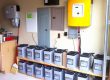
With a high self discharge rate, high maintenance and the chance of fire or explosion, flooded battery banks do not have a place in the home as an energy storage solution for solar. They are just not worth the extra time and money spent on maintenance as well as the worry that something catastrophic may happen to your home and family. It is just not worth it. AGM and Gel batteries are the only way to go. In fact Gel batteries are the best. Not only from a safety standpoint, but from a performance standpoint, no other lead acid battery outperforms a Gel. Gel batteries also have the lowest total cost of ownership. If your in the market for solar energy storage system do yourself a favor and make sure it’s a Gel battery bank, you’ll be glad you did.
Stay Charged my Friends,
AW



I was under the impression Trojan L-16’s are some of the best solar batteries you can buy? People talk highly about them all over the web. What gives?
Mike you are under the wrong impression. Did you even read the article above? L-16’s were a good battery for solar 20-25 years ago. For the DIY guy learning about solar they will suffice. Anyone relying on there batteries know floods do not make the grade, compared to a Gel or AGM. Most telecom batteries and ups systems are AGM or Gel batteries because the companies can’t risk potential hazards, throw $$$ down the drain on the maintenance cost of floods and they have to know there AGM or Gel battery bank is mission ready. Wouldn’t you take the same approach for your home or business?? It also won’t take long for the DIY to realize charging a flooded battery is like trying to charge a stone and are not a good solution for solar energy storage. Try reading this article Mike AGM vs. Gel I think it will help you out!